
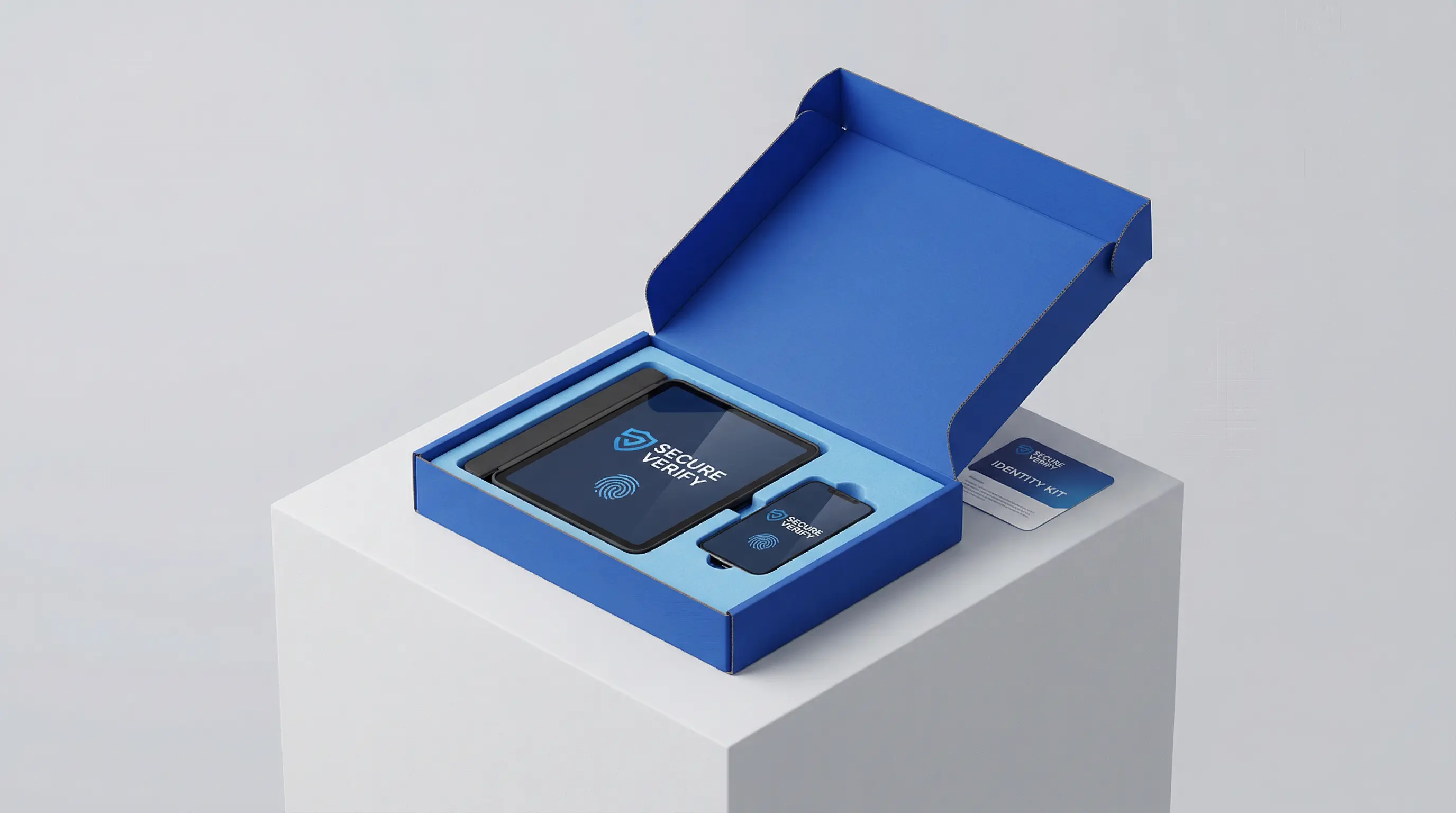
NIST SP 800-63 Rev 4 provides federal agencies with an unparalleled opportunity for transformation. Trustswiftly, for instance, leverages chat, video conferencing, facial recognition with liveness detection, document authentication and step-up reproofing to meet IAL2 and IAL3 requirements while eliminating one-and-done vulnerabilities associated with in-person checks.
The basic structure of IAL, AAL and FAL remains, yet has become more flexible to support remote identity proofing for IAL2. Discover how modern identity platforms like Trust Swiftly unlock full compliance with NIST 800-63-4 and deliver continuous verification through Zero Trust.
Verification
At present, authentication failures cost individuals and businesses millions each year in financial losses. This problem only grows as attackers become increasingly sophisticated – using anything from proxies and biometric data to AI-generated deepfakes as part of their attacks. To combat this threat, NIST 800-63-4 has made significant modifications to its identity verification guidelines, setting new assurance levels while encouraging secure hardware-anchored solutions.
Identity Assurance Levels 1, 2, and 3 (requiring in-person verification). While their definition may seem straightforward, actually complying with them can be much more complex – this is because agencies should select their nist ial3 verification systems based on appropriate business and privacy risks as well as mission needs rather than making a arbitrary choice based solely on this criteria.
Additionally, these guidelines specify that any assertion must have an FAL attached so relying parties may understand its level of confidence. This helps ensure federated assertions are independently verified by trusted verifiers instead of just anyone with access to users’ private data.
Trust Swiftly’s FedRAMP-aligned ial3 identity verification software fulfills these requirements by using cryptography to recast a user identifier into an unbreakable cryptographic chain of custody, creating a strong defense-in-depth strategy against remote IT worker fraud as well as North Korean cyberwarfare. Furthermore, by providing both hardware-anchored digital signature and tamper-evident controlled device validation of an applicant’s identifying documents; as well as certified 3D liveness detection that completely eliminates presentation attacks such as silicone masks, high resolution screens or AI deepfakes that routinely defeat software-only methods.
Compliance
NIST (National Institute of Standards and Technology) sets standards across many fields, from plumbing pressure loss measurements to chemical element viscosity measurements. Perhaps their most influential standards are NIST 800-63-4’s digital identity guidelines which govern how government agencies and contractors verify identities at a remote level.
NIST 800-63-4 provides an effective framework for assurance levels that addresses enterprises’ identity challenges. Starting from business risk analysis and selection of an appropriate level of identity proofing and authentication (IAL1 can be combined with strong authentication and federated identity management (IAL3) when needed to reach compliance).
ID Dataweb’s identity fraud mitigation and risk management platform was specifically created to keep pace with evolving assurance levels, such as NIST SP 800-63-4. Our solutions help enterprises future-proof their identity verification infrastructure with scalable, secure, user-friendly platforms supporting both IAL3 and AAL2 capabilities via FIDO passwordless authentication as well as mobile driver’s licenses.
Federal practices and contractor networks seeking to address remote IT worker fraud while meeting FedRAMP High and DoD IL4/5 authorization will need to conduct a fundamental overhaul of their identity verification architecture in order to protect themselves from its vulnerabilities. Trust Swiftly’s IAL3 Supervised Remote Identity Proofing solution neutralizes flaws by replacing password-based processes with an unbreakable cryptographic chain of custody that effectively eliminates vulnerabilities.
FedRAMP High
FedRAMP High Impact Level Security Requirements provide for systems processing sensitive unclassified federal data that require maximum protection, such as law enforcement and emergency response tools, financial systems, healthcare information systems handling life-critical information or similar systems. It is especially crucial for these kinds of systems.
The High Baseline requires 421 security controls across 17 control families, as well as requirements for contingency planning and information integrity. Furthermore, this baseline demands rigorous assessment and continuous monitoring – such as quarterly vulnerability scans, monthly incident reports, and annual reassessments. Furthermore, High-level systems must employ support staff from US soil.
Preparing for FedRAMP High can be time-consuming and resource-consuming. From conducting gap analyses to creating system security plans (SSPs) and other documentation to submitting evidence and selecting a third-party assessment organization (3PAO), preparation requires significant engineering, product and nist 800-63-4 ial3 compliance resources.
FedRAMP High certification is required of several specialized federal contracts and procurement vehicles, giving companies that achieve it a competitive edge. Furthermore, customers in regulated industries value having solutions approved by government that demonstrate robust security practices; with the proper preparation and tools in place, most CSPs can achieve FedRAMP High certification even those with the most impactful use cases.
Identity Proofing
Identity Proofing provides a safe, secure method of verifying whether someone online is who they claim they are, helping protect against identity theft, fraud, unauthorized access to sensitive data and services and compliance issues for businesses by assuring only authorized individuals have access to important resources.
The NIST 800-63-3 framework establishes three assurance levels (AAL), each increasing in confidence. At each AAL level are different proofing and authentication processes: at AAL 1 this requires only a single factor that can be verified remotely, at AAL 2 two different authenticators are needed to prevent replay attacks and phishing; and AAL 3 requires in-person verification as well as biometric authentication for applicant verification.
Identity proofing requires continuous improvement to remain effective and efficient. Organizations use it to adapt their authentication process to changes in the threat environment and address any gaps that may exist; for instance, businesses might recognize that certain communities lack affordable high-speed internet connections necessary for remote identity proofing, so they could offer proofing services at more easily accessible locations like community centers, post offices or partner businesses.
fedramp high identity proofing can improve usability by limiting the amount of information needed to authenticate, or by employing alternative authentication methods tailored specifically for each user base. For instance, banks could give their clients the option of using facial recognition, fingerprints or an iris scan verification methods instead of traditional forms of ID – these alternatives tend to be much simpler to use and more reliable than their counterparts.















Leave a Reply