
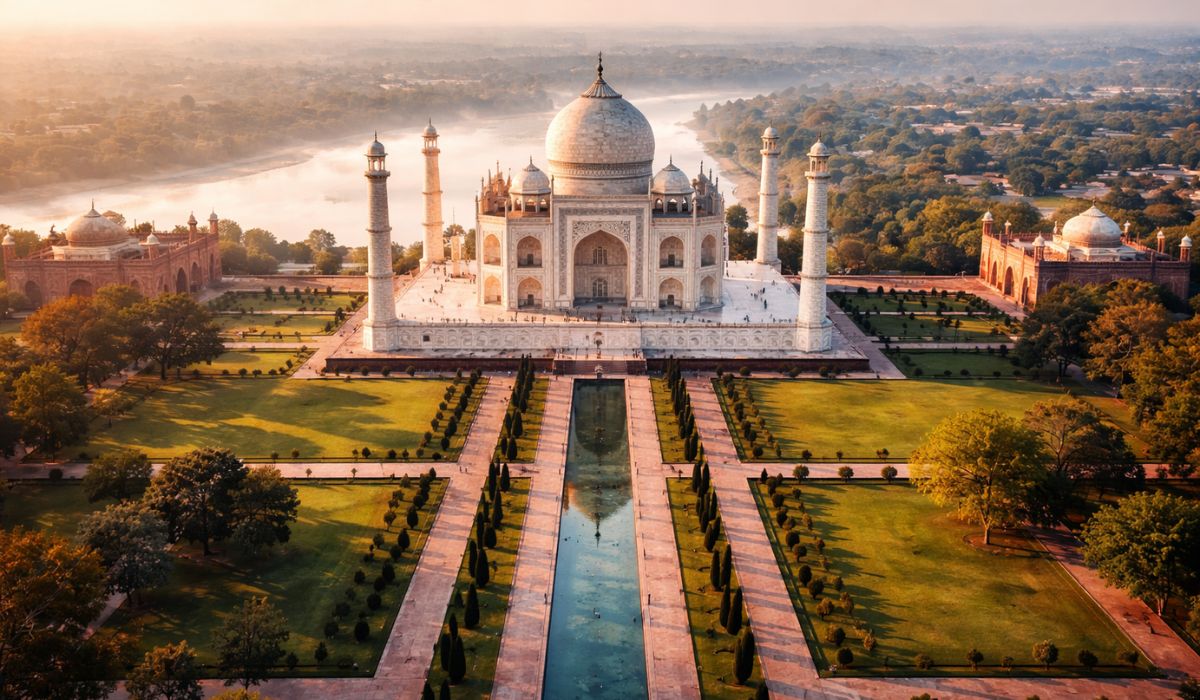
There are very few places that genuinely live up to their reputation. The Taj Mahal, however, is one of them.
No photograph can prepare you for the first moment. As you walk through the main gateway, the white marble glows against the sky. The perfectly symmetrical gardens lead up to the monument. The reflecting pool sits completely still. Everything stops you in your tracks. For a few seconds, you simply forget to breathe.
For millions of travellers, a taj mahal tour is not just sightseeing. In fact, it redefines how you think about beauty, history, and human ambition. Moreover, the right planning and the right guide turn it into a memory you carry forever.
Just as the right outfit transforms how you feel on a special day, the right travel plan transforms how you experience a destination. If you love style and travel inspiration together, Daily Outfits is worth exploring — because great journeys deserve great looks too.
This guide covers everything — history, best time to visit, what to expect, and how to plan your trip the smart way.
The Story Behind the Taj Mahal
Understanding the history makes everything you see far more meaningful.
Who Built the Taj Mahal
Mughal Emperor Shah Jahan built the Taj Mahal between 1632 and 1653. He dedicated it to the memory of his wife Mumtaz Mahal, who died during the birth of their fourteenth child. Grief consumed him so deeply that he commissioned the most magnificent mausoleum the world had ever seen. As a result, what stands in Agra today is not just architecture — it is emotion carved in marble.
The Construction
Over 20,000 artisans worked for more than two decades to complete the structure. Workers transported white marble all the way from Makrana in Rajasthan. Additionally, craftsmen hand-inlaid precious stones into the marble surfaces — turquoise from Tibet, lapis lazuli from Afghanistan, and jade from China. Furthermore, Persian calligrapher Amanat Khan crafted the intricate calligraphy running along the gateway and walls.
UNESCO Recognition
The building stands so perfect in its proportions that UNESCO declared it a World Heritage Site in 1983. Consequently, the world now considers it one of the Seven Wonders of the Modern World. In fact, millions of visitors travel specifically to Agra every year just to stand before it.
The Tragic Ending
After Shah Jahan completed the Taj Mahal, his son Aurangzeb imprisoned him in Agra Fort. From his window, he could see the Taj Mahal in the distance. However, he could never visit it again. When he died, workers buried him beside Mumtaz Mahal inside the Taj — creating the only intentional asymmetry in the entire monument.
That kind of history transforms a taj mahal tour from sightseeing into something much deeper.
What to See During Your Taj Mahal Tour
Most visitors spend two to four hours inside the complex. Therefore, knowing what to prioritise makes a significant difference.
The Main Gateway
The red sandstone entrance gateway is spectacular on its own. As you walk through it, the arch frames the Taj Mahal perfectly. Consequently, this moment creates one of the most photographed scenes in all of travel.
The Reflecting Pool
The long rectangular pool creates an iconic mirror reflection of the dome and minarets. For best results, visit early in the morning before wind disturbs the surface. In fact, many photographers consider this the most important shot of the entire visit.
The Main Mausoleum
The central white marble dome rises 73 metres into the sky. Inside, the cenotaphs of Mumtaz Mahal and Shah Jahan sit surrounded by intricate lattice screens of carved marble. Moreover, individual flowers inlaid with dozens of different stones cover the walls — each petal a separate, hand-placed piece of work.
The Four Minarets
The architects designed the four minarets to tilt slightly outward. This was a deliberate earthquake safety decision. As a result, in the event of a collapse, they would fall away from the main structure rather than onto it.
The Mosque and Guest House
Two identical red sandstone buildings flank the mausoleum on either side. The western building serves as a functioning mosque. In contrast, the eastern building — known as the jawab — exists purely for symmetry and never served as a place of prayer.
The Yamuna River Side
Walk behind the main structure to reach the river terrace. From here, the view of the Taj Mahal at sunrise is breathtaking. Additionally, this spot remains one of the least crowded areas in the entire complex.
Best Time to Visit the Taj Mahal
Timing makes an enormous difference to your overall experience. Therefore, planning your visit around the right hour and season is essential.
Sunrise
Arriving at sunrise gives you the best possible experience. The light is soft and golden, the crowds are minimal, and the atmosphere feels calm and almost spiritual. In short, if you can only visit at one time of day — choose sunrise without hesitation.
Early Morning
If a sunrise visit is not possible, however, arriving as early as the gates open is your next best option. You still get good light and manageable crowd levels.
Midday
The Taj Mahal draws its biggest crowds between 10 AM and 2 PM. Furthermore, the light turns harsh during these hours. As a result, most experienced travellers avoid this window entirely.
Sunset
The evening light turns the white marble a warm orange and pink. Moreover, crowds thin out noticeably in the late afternoon. Consequently, sunset offers a peaceful and visually stunning alternative to sunrise.
Moonlight Viewing
On select full moon nights, the Taj Mahal opens after dark for a special moonlight viewing. Seeing the white marble glow under moonlight is a completely different experience. In fact, very few travellers know about or take advantage of this rare opportunity.
Best Season
October through March offers the most comfortable conditions for visiting Agra. Temperatures stay pleasant and skies remain clear. In contrast, April through June brings extreme heat. Additionally, July through September brings monsoon rains, humidity, and occasional poor visibility.
How to Reach the Taj Mahal
From Delhi
Agra sits approximately 200 kilometres from Delhi. Travel by road takes 3 to 4 hours via the Yamuna Expressway. Alternatively, the Vande Bharat Express completes the journey in under 2 hours. Therefore, a same-day taj mahal tour from Delhi by Vande Bharat train remains one of the most efficient and comfortable options available.
From Jaipur
Agra lies around 230 kilometres from Jaipur, and the road journey takes approximately 4 to 5 hours. Moreover, travellers on the Golden Triangle circuit frequently combine a same-day Agra visit with their Jaipur stay — making excellent use of their time.
From Bangalore and Chennai
Travellers from these cities typically fly into Delhi first. From there, they continue to Agra by road or train. In fact, one-day Taj Mahal tours from Bangalore and Chennai by flight via Delhi work perfectly for those with limited time.
Taj Mahal Tour Options
Not all Taj Mahal tours deliver the same experience. Therefore, your time, budget, and travel style should guide your choice carefully.
Same Day Agra Tour
This is the most popular option for travellers staying in Delhi. You depart early in the morning, visit the Taj Mahal and Agra Fort, and return to Delhi the same evening. In fact, a well-run same-day tour gives you 4 to 5 solid hours in Agra.
Taj Mahal Sunrise Tour
This tour builds its entire schedule around the early morning golden hour. You arrive just as the gates open and experience the monument in the best possible light. Furthermore, you finish all sightseeing before midday heat and crowds arrive.
Overnight Agra Tour
This two-day experience gives you significantly more time to explore. You visit the Taj Mahal in the evening, stay overnight in Agra, and return for sunrise the following morning. Consequently, you experience the monument in completely different lighting conditions — which makes an extraordinary difference.
Moonlight with Sunrise Tour
This is the ultimate taj mahal tour experience. You visit on a full moon evening, stay overnight, and return at sunrise the next morning. As a result, you get two completely different and equally stunning experiences in a single trip.
Taj Mahal Honeymoon Tour
This two-day experience is specially curated for couples. It includes romantic hotel stays, private transfers, and guided visits timed for the most intimate moments. Moreover, since Shah Jahan built the Taj Mahal as a monument to love, it remains one of the most meaningful honeymoon destinations in the world.
Reels and Royal Frames Tour
Photography enthusiasts and content creators particularly enjoy this two-day tour. Expert guides help you capture the best images of the Taj Mahal and Agra Fort. Additionally, they provide specific advice on angles, lighting, and timing throughout the visit.
What to Know Before You Go
Entry and Photography
Foreign nationals pay a higher entry fee than Indian citizens. However, this fee covers shoe covers and a water bottle. You can photograph throughout the complex freely. In contrast, tripods are not allowed inside the main building.
What to Carry
Always carry a valid photo ID. Security staff screen all bags at the entrance gate. Furthermore, the complex does not permit food, tobacco, or large bags inside.
Dress Code
No strict dress code exists at the Taj Mahal. However, modest and comfortable clothing suits the setting well. You will walk on marble and sandstone surfaces for several hours. Therefore, comfortable footwear is essential. For outfit ideas that combine travel comfort with everyday style, Daily Outfits has plenty of inspiration worth browsing before you pack.
Skip the Line
Queues at the Taj Mahal entrance grow very long during peak season. Consequently, booking a tour with skip-the-line entry saves significant time. Moreover, it keeps your energy and focus on the experience itself rather than the wait.
Hire a Guide
The Taj Mahal reveals itself fully only when you understand what you are looking at. Therefore, hiring an expert local guide is strongly recommended. In fact, many travellers say their guide delivered the single best part of their entire Taj Mahal experience.
Planning Your Taj Mahal Trip the Right Way
Many travellers make the mistake of treating the Taj Mahal as a quick photo stop. However, rushing through in 90 minutes means missing most of what makes it extraordinary — the stonework details, the changing light, the quieter corners, and the stories only a great guide can tell.
Therefore, give yourself at least three to four hours inside the complex. Additionally, if your schedule allows, combine your visit with Agra Fort, which sits just 2.5 kilometres away. Consequently, you walk away with a much fuller picture of Mughal history in a single day.
India Travel Bear is a trusted Agra-based tour company offering expert local guides, skip-the-line entry, and hotel pickup. Furthermore, their wide range of taj mahal tour packages suits every type of traveller — from same-day visitors to honeymooners to photography enthusiasts.
International travellers consistently praise their guides for deep knowledge and genuine care. Moreover, hundreds of verified reviews on TripAdvisor, Viator, and GetYourGuide confirm India Travel Bear as one of the most trusted names for Taj Mahal tours.
Final Thoughts
Some destinations impress you. Others entertain you. However, some destinations genuinely move you — places that make you feel the full weight of human history and emotion in a single moment.
The Taj Mahal belongs in that last category. Therefore, whether you visit India for the first time or return after years away, a taj mahal tour deserves the top spot on your itinerary.
Plan it well. Time it right. In short, give it the attention it truly deserves.
You will not regret it.
📞 Phone: +91 7302833695 📧 Email: info@indiatravelbear.com 🌐 Website: www.indiatravelbear.com









Leave a Reply