
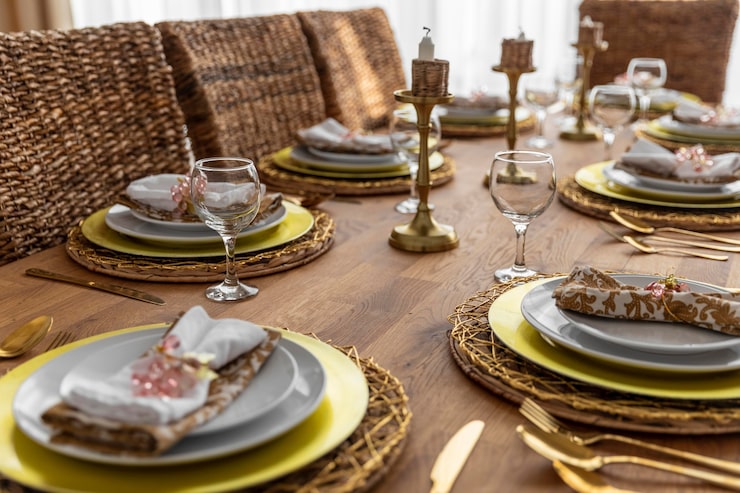
The household goods sector in Pakistan is experiencing a significant shift in retail dynamics this April 2026. For consumers and trade analysts, the dinner set price in Pakistan serves as a key indicator of domestic manufacturing costs and import stability. As the spring wedding season reaches its peak, the demand for high-quality tableware has surged, leading to new pricing structures across major retail hubs. In 2026, the market is defined by a move toward “Hybrid Materials”—products that offer the elegance of porcelain with the durability of reinforced melamine. Industrial manufacturing units in Gujranwala and Faisalabad have updated their wholesale benchmarks to reflect changes in raw material logistics. This report provides a detailed breakdown of the current market rates, material classifications, and the economic factors influencing the tableware industry in Pakistan today.
1. Economic Drivers of the 2026 Tableware Market
The commercial value of dinnerware in Pakistan is influenced by several macroeconomic variables that have stabilized in early 2026.
Manufacturing Overhead and Energy Tariffs The primary factor dictating the dinner set price in Pakistan is the cost of energy used in ceramic kilns. In 2026, many local manufacturers have transitioned to “Solar-Electric Hybrid” systems. This transition has allowed brands to maintain price stability despite fluctuations in global gas prices. The efficiency of these new kilns has reduced the “Cost-per-Unit” for mass-produced stoneware, benefiting the end consumer.
Supply Chain and Transportation Efficiency The completion of new logistics corridors in 2026 has reduced the “In-Transit Damage” rate for fragile goods. Specialized packaging standards now used by major brands have lowered the insurance premiums on bulk shipments. This logistics efficiency has allowed retailers in cities like Karachi and Quetta to offer prices that are more closely aligned with the manufacturing heartland of Punjab.
2. 2026 Price Segmentation by Material Grade
To understand the current market, it is essential to categorize dinner sets based on their composition and intended use.
Melamine Segment (The Durability Leader)
Melamine remains the highest-volume seller in Pakistan due to its shatterproof nature and affordability.
-
24-Piece Casual Set: Rs. 14,500 – Rs. 18,200
-
72-Piece Full Service: Rs. 35,000 – Rs. 49,500
-
96-Piece Deluxe Collection: Rs. 62,000 – Rs. 85,000
Opalware & Tempered Glass (Modern Utility)
Opalware has become the standard for modern middle-class households in 2026, offering microwave-safe convenience.
-
24-Piece Standard Series: Rs. 19,000 – Rs. 28,500
-
42-Piece Family Pack: Rs. 46,000 – Rs. 70,000
-
72-Piece Premium Bundle: Rs. 75,000 – Rs. 98,000
Fine Bone China & Luxury Porcelain (Premium Assets)
This segment is driven by artisanal value and is often purchased as a long-term household investment.
-
61-Piece Porcelain Set: Rs. 65,000 – Rs. 110,000
-
85-Piece Fine Bone China: Rs. 140,000 – Rs. 310,000
-
102-Piece Designer Gold Series: Rs. 335,000 – Rs. 550,000
3. Brand Competition and Market Authority
The 2026 retail landscape is dominated by brands that have invested in “Material Innovation.”
Graceware (The Mass-Market Benchmark) Graceware continues to lead the melamine industry by offering high-definition prints that mimic the look of expensive marble and stone. Their 2026 strategy focuses on “Volume-Based Pricing,” making them the go-to choice for the hospitality and catering sectors.
Onesto (The Quality Specialist) Onesto has captured the premium segment with its “Impact-Resistant Porcelain.” By focusing on the structural integrity of the glaze, they justify a higher dinner set price in Pakistan. Their products are marketed as “Generational Goods” that do not lose their luster over years of use.
Luminarc (The Global Standard) Luminarc remains the primary choice for tempered glass dinnerware. In 2026, their localized distribution networks have allowed them to reduce prices on their most popular “White-Glass” series, making international quality more accessible to the Pakistani consumer.
4. Regional Market Variations
Geographic location remains a factor in final retail pricing due to local taxes and shipping costs.
-
Punjab (Manufacturing Hub): Cities like Gujranwala and Lahore offer the most competitive rates, often 10-12% lower than the national average.
-
Sindh (Import Gateway): Karachi offers the widest variety of imported bone china, with competitive rates on European and Chinese brands.
-
Khyber Pakhtunkhwa & Balochistan: Prices in these regions reflect a “Logistics Premium” of 5-8% due to the costs of long-distance hauling from manufacturing centers.
5. The Business of “Wedding Bundles” in 2026
In Pakistan, the purchase of a dinner set is often part of a larger “Jahez” (dowry) or wedding gift. In 2026, retailers have introduced “Tiered Bundling” strategies. These packages combine dinner sets with cutlery and serving trays at a discounted total price. This commercial tactic has increased the “Average Order Value” for retailers by 22% in the first quarter of 2026.
6. Digital Retail and E-Commerce Integration
The way Pakistanis shop for home goods has been transformed by digital platforms.
-
Virtual Showrooms: Many top-tier brands now offer VR (Virtual Reality) experiences where customers can see how a dinner set looks on a fully set table before purchasing.
-
Direct-to-Consumer (D2C): Manufacturers are increasingly bypassing traditional wholesalers and selling directly to consumers via mobile apps. This has helped stabilize the dinner set price in Pakistan by removing unnecessary middleman markups.
7. Institutional Procurement Standards
For the corporate and hospitality sectors, the 2026 standards for procurement are based on “Lifecycle Cost.”
-
Scratch Resistance: Institutional buyers test the hardness of the glaze to ensure it can withstand industrial dishwashers.
-
Stacking Stability: Modern designs prioritize a low center of gravity to prevent breakage during high-volume storage.
-
Chemical Safety: All 2026 sets must be certified lead-free and cadmium-free to meet international health safety standards.
8. Investment Strategy for Retailers
For those entering the retail space, the “Opalware” segment offers the highest growth potential in 2026. It bridges the gap between low-cost melamine and high-cost porcelain. Retailers who focus on “Mid-Tier Luxury” are seeing the fastest inventory turnover rates this season.
9. Sustainability and Eco-Friendly Packaging
The 2026 consumer is more environmentally conscious. Brands are now using “Biodegradable Cushioning” instead of styrofoam for shipping. This move toward sustainability has become a key marketing point for premium brands, allowing them to capture the “Eco-Conscious” urban demographic.
10. Forecast for Q3 and Q4 2026
Market analysts expect prices to remain stable through the summer months. However, as the global price of “Kaolin Clay” (a primary ingredient for porcelain) is projected to rise in Q4, many brands are currently building up their raw material reserves to avoid passing those costs onto the consumer later in the year.
11. Conclusion: Tableware as a Reflection of Economic Resilience
In conclusion, the dinner set price in Pakistan in April 2026 reflects a market that has successfully balanced traditional craftsmanship with modern industrial efficiency. The availability of diverse materials and price points ensures that every segment of society has access to quality household goods. For the consumer, the current market offers an unprecedented level of choice and transparency. For the business owner, the tableware industry represents a stable and growing sector of the Pakistani retail economy. As the year progresses, the focus will continue to be on “Value and Durability.” Whether for a new home, a wedding gift, or a commercial establishment, a quality dinner set remains a symbol of hospitality and household pride in Pakistan.












Leave a Reply