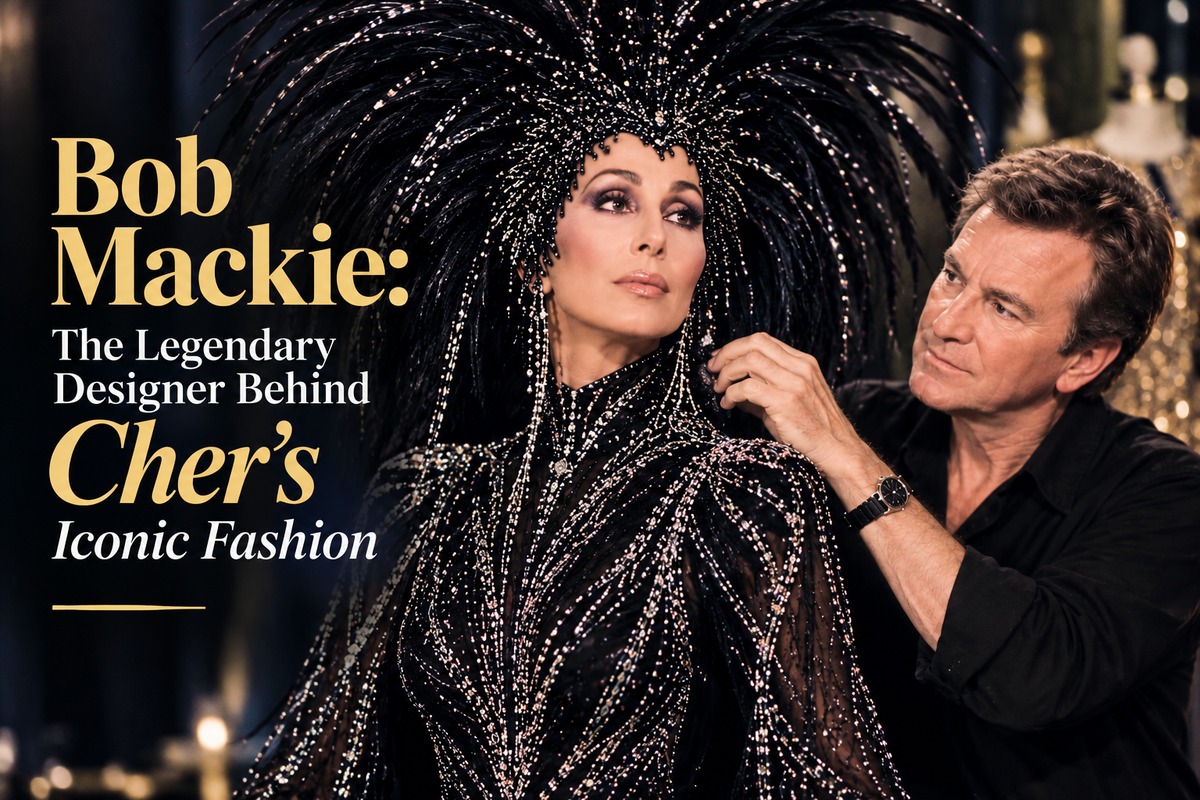
Explore Bob Mackie's fashion legacy, from Cher and Marilyn Monroe to Carol Burnett, Barbie, QVC and the dresses that defined his career.
The fashion world is remembering Bob Mackie this week after news broke on September 14, 2026, that the designer had died at 87. For more than five decades, Mackie turned performers into legends through sequins, feathers, and silhouettes nobody else dared attempt, and nowhere was that partnership more visible than with Cher, whose most unforgettable looks included many of Mackie's most celebrated creations. His death has sent people searching for the story behind the man who helped shape how audiences picture Hollywood glamour itself, from variety-show television to Hollywood awards stages. Before getting into how he died, it is worth understanding why his work still matters so much.
Bob Mackie was an American costume and fashion designer born Robert Gordon Mackie on March 24, 1939, in Monterey Park, California. As a child he sketched elaborate costumes for his mother and sister and stayed involved in set and costume design through his school plays, a habit that never really left him. His career began in the early 1960s doing sketch work for Golden Age costumer Jean Louis and later working alongside Edith Head, two of the most influential names in studio era Hollywood costuming, after brief formal training in illustration at Pasadena City College and costume design at the Chouinard Art Institute. Over more than fifty years he moved fluidly between television, film, concert stages, and Broadway, eventually earning more than thirty Emmy nominations with nine wins, three Academy Award nominations for Lady Sings the Blues, Funny Lady, and Pennies From Heaven, plus a Tony Award. In 2002 he became the first costume designer inducted into the Television Academy Hall of Fame. Colleagues and critics often called him the Sultan of Sequins, a nickname that captured both his signature material and his theatrical, larger than life sensibility.
The relationship Mackie is best remembered for began on television, where he dressed Cher through her variety show years and later her solo concert tours, before the pairing found its way into pop culture history. At the 1974 Met Gala, Cher arrived on Mackie's arm in a sheer, beaded gown with white feathered sleeves and skirt, an outfit so striking it landed on the cover of Time magazine and became one of the most referenced naked dresses in fashion history. Their collaboration continued for decades, through award show entrances and stage costumes alike, including her feathered headdress look at the 1986 Academy Awards, which is part of why Cher and Mackie's names are still searched together today. He once said his process depended on watching how a performer actually moved before he ever picked up a pencil, since a design that looked right on paper could still fail once someone tried to dance or gesture in it. The two were also the subject of a 2024 documentary, Bob Mackie: Naked Illusion, which traced their working relationship from television soundstages to concert arenas.
Long before Cher, a young Mackie worked as a sketch artist under Jean Louis on the gown Marilyn Monroe wore to sing Happy Birthday to President John F. Kennedy in 1962, an early sign of the controlled excess that would define his later work. On The Carol Burnett Show, where he designed costumes for all eleven seasons, he became known for pieces built as much for comic timing as for glamour, most famously the curtain rod dress from the show's Gone with the Wind parody, a piece now held in the Smithsonian's collection and still cited as one of television's funniest costume gags decades later. Beyond television, his client list reads like a history of American performance style. Diana Ross wore his floor sweeping gowns on concert stages built for spectacle, Tina Turner performed for years in his dramatic, fringe heavy stage costumes, and Dolly Parton favored his exaggerated, sparkling silhouettes, which matched her own sense of humor about glamour and excess. Barbra Streisand wore his sheer batwing gown in Funny Lady, one of the roles that earned Mackie an Oscar nomination. He also designed for male performers, including Elton John and the Jackson 5, proof that his instinct for spectacle was never limited to one type of star.
The industry recognized that reach well before his death. In 2019, the Council of Fashion Designers of America gave him its Geoffrey Beene Lifetime Achievement Award, an honor that acknowledged something television audiences already understood instinctively, that his work sat comfortably alongside runway fashion even though most of it was built for a stage rather than a catwalk. In 2023, RuPaul presented him with a lifetime achievement award at the RuPaul's Drag Race season finale, a nod to how much modern drag and pageant style still borrows from his sense of scale and shine.
Across all of it, certain choices repeated. Heavy beadwork, ostrich and marabou feathers, hand applied rhinestones, and a body conscious cut built around illusion netting that made audiences believe they were seeing more than they actually were. Mackie treated a costume the way a choreographer treats movement, thinking about how a silhouette would catch stage lighting or read from the back row of an arena rather than just how it looked standing still. He also had a clear sense of humor about the whole enterprise, happy to build a dress that made an audience laugh as readily as one meant to make them gasp. That mix of craftsmanship, comic timing, and theatrical proportion is what later generations of red carpet stylists still borrow from, whether or not they credit him by name.
In 1982, Mackie expanded from custom costuming into a ready to wear collection, alongside collectible Bob Mackie Barbie dolls that turned his stage aesthetic into something fans could actually own rather than only watch from a distance. In the 1990s he took that accessibility further with a Wearable Art Collection for QVC, bringing his beading and embellishment techniques to a much wider audience well beyond Hollywood. It marked a shift from designing for a handful of stars to designing for the people watching them at home, and it is part of why his name still surfaces in searches outside fashion industry circles entirely, from collectors trading vintage Mackie Barbies to shoppers who first discovered his work through a QVC broadcast rather than a red carpet.
Modern awards season fashion, from sheer beaded gowns to statement outerwear built purely to be photographed, owes a real debt to the standard Mackie set decades ago. His archive has also had a very literal second life on recent red carpets: Miley Cyrus performed in a circa-2002 Mackie dress at the 2024 Grammys, Zendaya has worn his archival gowns to the Time100 Gala and to Cher's Rock and Roll Hall of Fame induction, and Taylor Swift wore an archival Mackie look while introducing her album The Life of a Showgirl. Versatile Fashions brings a similar appetite for bold, eye-catching style into modern outerwear, with statement jackets and coats built for anyone who wants their wardrobe to make an entrance. Shoppers looking for dramatic silhouettes and eye catching detailing can browse the women's collection, while anyone dressing for a formal evening out has options in the women's suits and tuxedos line. Neither is presented as a Mackie design, just as a nod to the same instinct for making an outfit memorable.
Bob Mackie died on September 14, 2026, at age 87, at his home in Palm Springs, California. His longtime publicist, Jenelle Hamilton, confirmed to CBS News that he died from pneumonia. His family shared the news through his official Instagram account.
Mackie's influence outlasts any single decade of fashion. His career connected Hollywood's Golden Age to today's pop culture, from his early work as a sketch artist on Marilyn Monroe's 1962 gown to Taylor Swift wearing an archival Mackie design on stage more than sixty years later. Cher herself has called him a genius, and the costumes he built for her, for Carol Burnett, and for dozens of other performers remain reference points for anyone studying how clothing can build a persona rather than simply cover a body. Fashion historians will likely spend years cataloguing just how many of today's red carpet conventions trace back to choices he made on a soundstage decades ago. That is probably why searches around his name spiked so quickly this week, and why his designs will keep showing up in retrospectives long after this particular news cycle moves on.
FAQs:
An American costume and fashion designer known for dressing Cher, Carol Burnett, and other major entertainers across five decades.
Elaborate, sequined costumes for Cher, Carol Burnett, and Diana Ross, plus nine Emmys, a Tony Award, and his Barbie designs.
Yes, he dressed Cher for decades, including her famous 1974 Met Gala "naked dress."
Cher's Met Gala gown and Carol Burnett's curtain-rod "Gone with the Wind" parody dress are his best known.
No, credited designer Jean Louis did; Mackie worked as a young sketch artist on the gown.
Her show's costumes across all eleven seasons, including the famous curtain-dress "Gone with the Wind" gag.
Yes, Bob Mackie Barbie dolls launched in 1982 alongside his ready-to-wear collection.
Yes, he launched a Wearable Art Collection for QVC in the 1990s.
He was 87 when he died on September 14, 2026.
His publicist confirmed he died from pneumonia at his home in Palm Springs, California.

This post has been authored and published by one of our premium contributors, who are experts in their fields. They bring high-quality, well-researched content that adds significant value to our platform.








Daily Outfits is your trusted fashion destination for outfit inspiration, style tips, seasonal trends, wardrobe guides, and everyday fashion advice. Stay inspired and dress with confidence every day.