
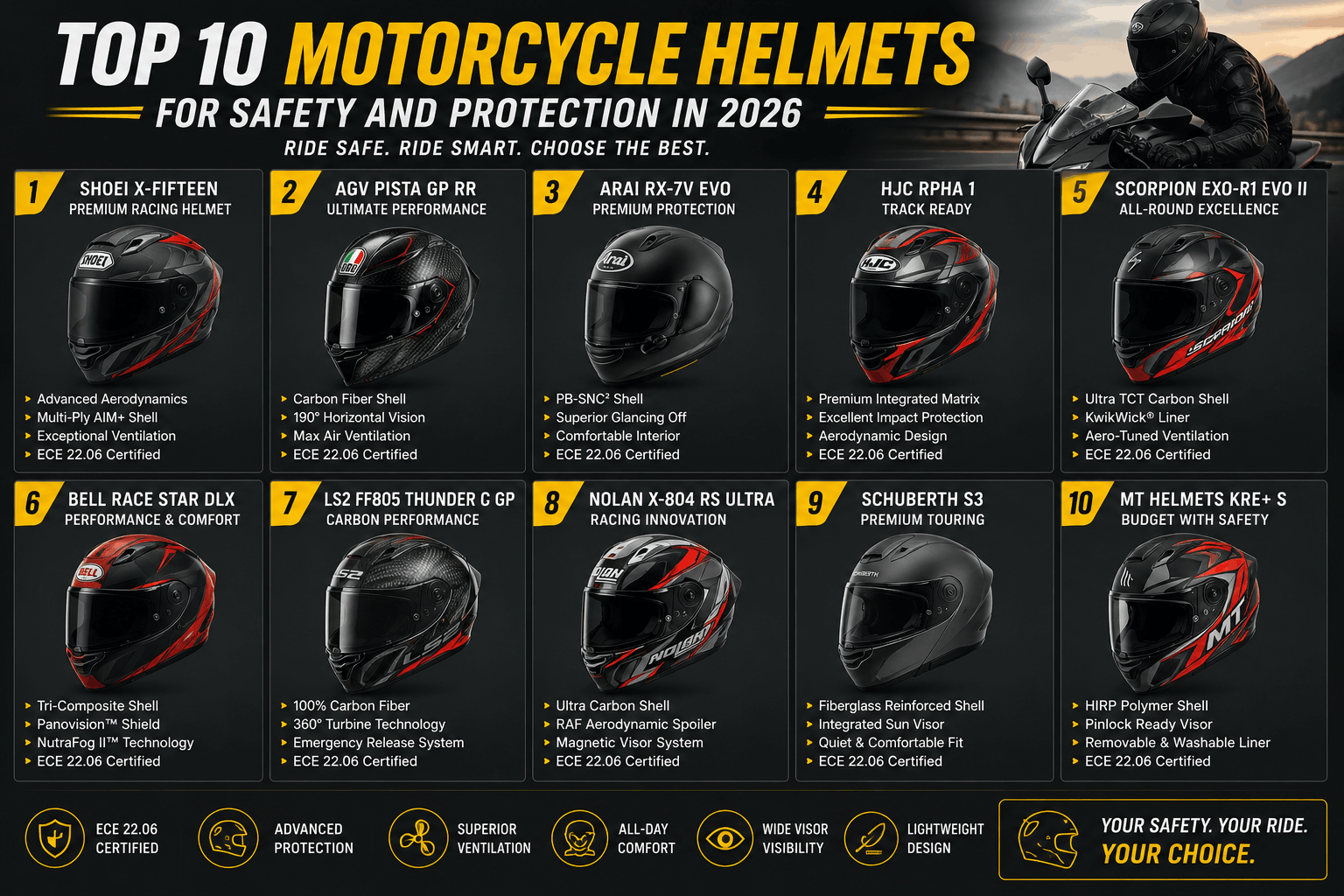
Motorcycle helmets remain the single most important piece of protective equipment for riders in 2026. Modern helmet technology now combines impact protection, aerodynamic engineering, ventilation systems, noise reduction, communication compatibility, and advanced certification standards into highly specialized riding gear designed for different riding environments.
According to research published by the National Highway Traffic Safety Administration (NHTSA), motorcycle helmets significantly reduce the risk of fatal head injuries during crashes. Organizations such as the NHTSA and Wikipedia’s Motorcycle Helmet resource explain that modern helmet construction is based on decades of safety engineering, material science, and impact-testing research.
In 2026, riders face a growing number of helmet choices ranging from modular touring helmets to lightweight sport designs and advanced adventure helmets. However, the most important factor remains proper safety certification. Riders increasingly focus on helmets that meet Department of Transportation (DOT) and Economic Commission for Europe (ECE) safety standards because these certifications validate testing for impact absorption, retention systems, penetration resistance, and structural durability.
Why Motorcycle Helmets Matter More Than Ever
Motorcycle helmets protect riders against:
- Head trauma
- Impact injuries
- Facial injuries
- Wind fatigue
- Flying debris
- Weather exposure
- Noise-related fatigue
Helmet engineering has evolved significantly over the last decade. Manufacturers now incorporate advanced materials such as:
- Carbon fiber composites
- Polycarbonate shells
- Fiberglass blends
- Multi-density EPS liners
These materials improve impact energy management while reducing overall helmet weight.
Modern riding environments also demand:
- Better aerodynamics
- Improved visibility
- Communication system compatibility
- Ventilation efficiency
- Long-distance comfort
As motorcycle speeds and traffic density increase, proper helmet protection becomes even more critical.
Understanding DOT and ECE Helmet Certifications
Motorcycle helmet certifications verify that helmets meet established impact and safety standards.
DOT Certification Explained
DOT Motorcycle Helmets comply with standards established by the United States Department of Transportation under FMVSS 218 regulations.
DOT testing evaluates:
- Impact absorption
- Penetration resistance
- Strap retention strength
- Peripheral vision requirements
DOT-certified helmets are legally required for road use in many U.S. states.
ECE Certification Explained
ECE Motorcycle Helmets meet standards established by the United Nations Economic Commission for Europe.
ECE testing is widely recognized internationally and includes:
- Multi-point impact testing
- Rotational force analysis
- Shell deformation testing
- Chin bar performance evaluation
- Environmental durability assessments
ECE 22.06 standards introduced stricter testing protocols compared to earlier certification versions.
Top 10 Motorcycle Helmet Types for Safety and Protection in 2026
1. Full-Face Helmets
Full-face helmets provide the highest level of overall protection because they cover:
- Skull
- Jaw
- Chin
- Face
Advantages include:
- Maximum impact protection
- Superior wind resistance
- Reduced noise exposure
- Better weather protection
These helmets are commonly recommended for:
- Sport riding
- Highway touring
- Daily commuting
2. Modular Helmets
Modular helmets combine full-face protection with flip-up functionality.
Benefits include:
- Improved communication convenience
- Easier fueling stops
- Touring comfort
- Versatile riding use
Modern modular helmets now feature reinforced hinge systems that improve structural integrity.
3. Adventure Touring Helmets
Adventure helmets are designed for mixed riding environments.
Features commonly include:
- Extended visors
- Large eye ports
- Improved ventilation
- Off-road compatibility
These helmets are ideal for:
- Dual-sport riding
- Long-distance touring
- Adventure travel
4. Carbon Fiber Helmets
Carbon fiber helmets prioritize lightweight construction while maintaining high impact resistance.
Advantages include:
- Reduced neck fatigue
- Improved aerodynamics
- Premium structural performance
Professional riders often prefer carbon fiber for high-speed touring and sport riding.
5. Touring Helmets
Touring helmets focus heavily on rider comfort during extended travel.
Common touring features:
- Noise reduction systems
- Large ventilation channels
- Communication compatibility
- Anti-fog visors
These helmets are optimized for highway use and multi-hour riding sessions.
6. Open-Face Helmets
Open-face helmets provide:
- Improved airflow
- Wide visibility
- Reduced heat buildup
However, they offer less facial protection compared to full-face helmets.
They remain popular among:
- Cruiser riders
- Urban commuters
- Warm-weather riders
7. Off-Road Helmets
Off-road helmets are specifically designed for motocross and dirt riding.
Key features:
- Extended chin guards
- Aggressive ventilation
- Lightweight construction
- Goggle compatibility
These helmets are not always ideal for highway riding because of aerodynamic differences.
8. Smart Helmets
Smart helmets integrate advanced technology such as:
- Bluetooth communication
- Navigation displays
- Rear-view camera systems
- Voice controls
These helmets continue gaining popularity among touring riders.
9. Retro-Inspired Helmets
Modern retro helmets combine vintage styling with updated safety engineering.
Common improvements include:
- Advanced EPS liners
- DOT/ECE certification
- Lightweight shells
These helmets appeal to:
- Café racer riders
- Cruiser enthusiasts
- Heritage motorcycle communities
10. Hybrid Street Helmets
Hybrid helmets combine features from:
- Touring helmets
- Adventure helmets
- Sport helmets
These versatile designs serve riders who frequently switch riding environments.
Key Helmet Technologies in 2026
Multi-Density EPS Liners
Expanded polystyrene (EPS) liners absorb impact energy during crashes.
Multi-density systems improve:
- Force distribution
- Rotational energy management
- Multi-impact protection zones
Emergency Release Systems
Emergency cheek pad release systems allow medical personnel to remove helmets more safely after accidents.
Anti-Fog Visor Systems
Pinlock and anti-fog technologies improve visibility in:
- Cold weather
- Rain conditions
- Humid environments
Aerodynamic Shell Design
Wind tunnel-tested shell designs reduce:
- Wind drag
- Rider fatigue
- Neck strain
These improvements become especially important during highway riding.
How Riders Choose the Right Motorcycle Helmet
Match the Helmet to Riding Style
Different riding environments require different helmet configurations.
Sport Riders
Typically prioritize:
- Aerodynamics
- Lightweight shells
- Aggressive ventilation
Touring Riders
Often prefer:
- Noise reduction
- Comfort liners
- Communication compatibility
Cruiser Riders
Usually focus on:
- Comfort
- Visibility
- Traditional aesthetics
Ensure Proper Helmet Fit
A poorly fitted helmet can compromise safety.
Professional fitting guidelines recommend:
- Snug cheek contact
- Stable crown fit
- No pressure points
- Minimal movement during head rotation
A properly fitted helmet should not shift excessively during riding.
Evaluate Certification Standards
Helmet certification remains one of the most important purchasing factors.
Riders should verify:
- DOT compliance
- ECE certification
- Updated testing standards
Certification labels should always appear inside the helmet.
Common Mistakes Riders Make When Buying Helmets
Prioritizing Appearance Over Safety
Some riders choose helmets based primarily on visual design while ignoring:
- Certification standards
- Shell construction
- Impact performance
Safety ratings should remain the primary consideration.
Buying Oversized Helmets
Loose helmets may shift during impacts and reduce protective effectiveness.
Ignoring Ventilation
Poor airflow can increase:
- Heat fatigue
- Moisture buildup
- Long-distance discomfort
Keeping Helmets Too Long
Helmet materials gradually degrade because of:
- UV exposure
- Sweat absorption
- Repeated impacts
- Environmental wear
Most manufacturers recommend replacing helmets every five years under normal use conditions.
Expert Recommendations for Helmet Safety
Motorcycle safety specialists commonly recommend:
- Full-face helmet designs for maximum protection
- Dual DOT/ECE certification when available
- Lightweight shells for reduced fatigue
- Proper fit testing before purchase
Advanced rider training programs also emphasize:
- Regular helmet inspection
- Strap integrity checks
- Visor maintenance
- Interior liner cleaning
These practices improve long-term helmet performance.
Motorcycle Helmet Trends in 2026
The motorcycle helmet industry continues evolving rapidly.
Major trends include:
- Integrated communication systems
- Lightweight composite shells
- Improved rotational impact protection
- Enhanced visor technology
- Noise-reduction engineering
- Sustainable manufacturing materials
Manufacturers increasingly prioritize both rider comfort and advanced impact management.
Frequently Asked Questions
What is the safest type of motorcycle helmet?
Full-face helmets generally provide the highest level of protection because they cover the entire head and chin area.
What does DOT certification mean?
DOT certification means a helmet complies with U.S. Department of Transportation safety standards for motorcycle road use.
What is ECE certification?
ECE certification verifies that a helmet meets internationally recognized European safety testing standards.
Are ECE helmets safer than DOT helmets?
ECE testing often includes more extensive impact scenarios and rotational testing, though both standards provide important safety validation.
How should a motorcycle helmet fit?
A helmet should fit snugly without causing painful pressure points or excessive movement.
How long does a motorcycle helmet last?
Most manufacturers recommend replacing helmets every five years or immediately after a significant impact.
Why are lightweight helmets important?
Lightweight helmets reduce neck fatigue and improve rider comfort during long rides.
Are modular helmets safe?
Modern modular helmets can provide strong protection when properly certified, though full-face helmets generally offer maximum structural integrity.
What materials are used in modern motorcycle helmets?
Common materials include:
- Polycarbonate
- Fiberglass composites
- Carbon fiber
- Multi-density EPS foam
Why is ventilation important in motorcycle helmets?
Ventilation helps regulate temperature, reduce visor fogging, and improve rider comfort during extended riding.
Conclusion
Motorcycle helmets remain the most critical component of rider safety equipment in 2026. Advances in helmet engineering, certification standards, and material technology have significantly improved impact protection, comfort, and long-distance usability for modern riders.
Whether selecting full-face touring helmets, lightweight carbon fiber designs, or modular systems, riders should prioritize certification standards, proper fit, and riding-specific functionality above appearance alone. DOT and ECE certifications continue serving as the foundation for reliable motorcycle helmet safety evaluation worldwide.
As motorcycle technology evolves, helmet manufacturers continue developing smarter, lighter, and more protective systems designed to meet the demands of modern riding environments. For riders seeking maximum road safety and long-term comfort, investing in a properly certified motorcycle helmet remains one of the most important decisions in all of motorcycle gear selection.
















Leave a Reply