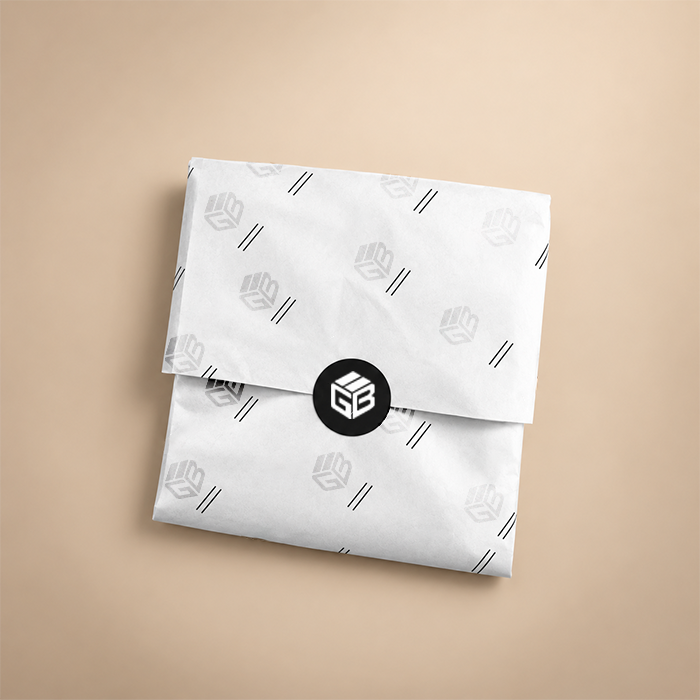
Food presentation involves more than the container it arrives in. The wrapping around a sandwich, the liner beneath a pastry, or the sheet separating baked goods can also contribute to a business’s visual identity. Custom butter paper brings printed branding into these everyday packaging details.
The starting point is suitability. Before choosing a pattern or placing an order, establish how the paper will be used and request documentation for that application. The finished sheet—including its printing and any treatment—should be appropriate for its intended contact with food.
Custom butter paper is a term used for personalized paper intended for food wrapping, lining, or presentation. Customization may include a business logo, repeating artwork, brand colors, messages, and specific sheet dimensions.
The name alone should not determine how the paper is used. Ask the supplier to identify the exact material and explain its intended applications. Do not assume that products described as butter paper, baking paper, or greaseproof paper are interchangeable.
A clear purchasing brief should connect the proposed paper to the actual food, handling conditions, and packaging process.
Before designing the artwork, decide where the paper will appear and what it needs to do. Wrapping an individual item involves different practical considerations from lining a tray or separating products inside a box.
Consider the food’s characteristics and how long it will remain in contact with the sheet. Include any expected exposure to warmth, moisture, oils, or refrigeration in the supplier discussion.
Useful questions include:
Will the paper touch food directly?
What type of food will it hold or wrap?
What temperatures will it encounter?
How long will contact last?
Will staff fold, cut, or secure it?
Is it intended only for presentation, or for another specified use?
These details should guide material selection before printing begins.
Request information relevant to the complete printed product, not just the unprinted base paper. The specification should identify the paper, printing, coatings or treatments, and intended conditions of use.
Ask the supplier what documentation supports the proposed application and whether any restrictions apply. If only one side is intended to face the food, make sure that instruction is clear to the people using it.
Do not treat an attractive sample or a general “food-grade” description as a substitute for specific information. Keep the approved documentation with the order specification for future reference.
A sheet should be large enough to perform its intended task without requiring unnecessary folding or excessive overlap.
Test proposed dimensions using the actual product. For wrapping, check whether the sheet covers the item comfortably and remains manageable during service. For a liner, review how it fits inside the tray, basket, or box.
Avoid approving dimensions solely from a flat drawing. A sheet that looks appropriate on screen may feel awkward once folded around the food.
If several products need different sizes, identify each format clearly so staff can select the right one without repeated trimming.
A repeating logo is one possible design direction, but it is not the only option. Simple illustrations, a wordmark, or a restrained combination of symbols and text can also create a coherent presentation.
Keep the artwork connected to the business’s existing identity. Use familiar colors and typography rather than introducing an unrelated style just for the wrapping.
Consider how much of the sheet will remain visible after folding. Important wording should not depend on one exact placement unless the packing process can reliably achieve it.
Review the pattern both as a full sheet and around a finished product.
Custom butter paper does not need to carry every detail about the business. Start with the purpose of the print and remove elements that compete with it.
A logo, a short message, or a simple pattern may be enough. Small text can become difficult to read when the paper is folded, creased, or partially covered.
If a website address or other practical detail is included, check it at the actual printed size. Do not rely on an enlarged artwork preview.
The design should support the food presentation rather than draw attention away from it.
Request samples of the proposed finished paper and use them in a realistic trial. Include the actual food, contact time, temperature, and handling process where appropriate.
Review whether the sheet folds as expected, fits the packaging, and remains suitable throughout the intended use. Note any visible changes, handling difficulties, or concerns that require clarification from the supplier.
A successful trial for one application should not automatically become approval for another. Reassess the specification when the food, temperature, or use changes.
Record the approved material and sample details so repeat orders can be checked consistently.
A wrapping or presentation sheet should not automatically be used in an oven, microwave, or other heating process.
If heating is part of the intended application, request explicit confirmation of suitability, including any temperature, duration, and equipment restrictions. Follow the instructions for the specific finished product.
Keep staff guidance straightforward. Paper approved only for wrapping should not be stored or labeled in a way that encourages confusion with material intended for baking.
Clear distinctions are more useful than relying on a broad product name.
Decide where the paper will be stored and how staff will access it during service. Keep the supplier’s storage instructions with the product information.
A packing trial should include separating sheets, wrapping items, and placing them in the final container. Check whether the format fits the workspace and whether staff need a simple folding guide.
Order quantities should reflect realistic use and available storage. Allow for seasonal changes or artwork updates before committing to a large volume.
Keep different sizes and specifications clearly identified.
Ask for evidence before describing the paper as recyclable, compostable, biodegradable, or otherwise environmentally preferable. Any statement should relate to the finished printed sheet and its relevant disposal conditions.
Do not extend a claim about the base paper to every part of the finished product without support. Avoid using natural colors or leaf graphics to imply characteristics that have not been established.

This post has been authored and published by one of our premium contributors, who are experts in their fields. They bring high-quality, well-researched content that adds significant value to our platform.








Daily Outfits is your trusted fashion destination for outfit inspiration, style tips, seasonal trends, wardrobe guides, and everyday fashion advice. Stay inspired and dress with confidence every day.