Commercial construction projects involve numerous expenses beyond materials and labor. Contractors need to cover a variety of costs: equipment, insurance, administration, subcontractors, and unforeseen costs. Correct estimates enable businesses to come up with competitive offers and ensure that they do not lose out on their expected profits. But not considering indirect costs or mixing up markup with profit margin could cause problems in the finances. Hence, contractors must have reliable ways to calculate the costs and to come up with accurate project prices.
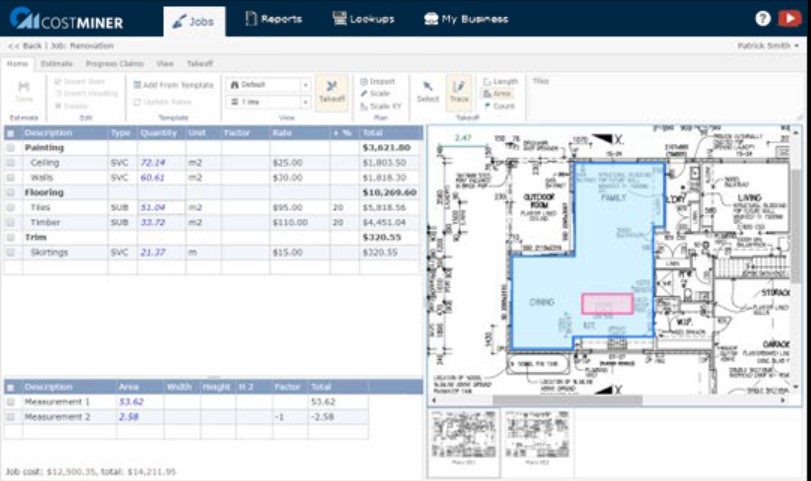
Modern estimating tools are used to group project costs and make money calculations easy. Commercial construction estimating software enables contractors to add overhead rates, work out target profit margins, and look at bid prices systematically. These calculations are based on the correct cost data and pricing assumptions. When the contractors understand what overheads and profitability are in software, they can do a better job of analyzing the estimate and deciding whether they want to bid on it. This also provides transparency in pricing and uniformity in financial planning in commercial construction projects.
Overhead costs are costs that contractors will have when they are running their businesses or managing projects. These costs are not associated with a specific construction activity and are therefore not direct costs. Both categories should be taken into consideration by contractors when preparing a detailed estimate of the project. Otherwise, the bid that has been proposed may not include the full cost of doing the project.
Direct costs are those costs associated with materials, labor, equipment used for certain activities, and subcontractor costs. For instance, on a commercial office project, concrete, steel, electrical wiring and installation labor requirements may be needed. Estimators work by working out these costs by applying quantities, unit prices, labour rates, and supplier quotations.
Indirect costs are office rental, administrative salary, general insurance, accounting services and business utilities. Some costs relate to a specific project, and others to the company's overall operations. These costs need to be distributed in a uniform manner by contractors. In order to estimate commercial construction costs accurately, it is essential to differentiate between direct costs and overhead.
Markup and profit margin are distinct concepts relating to cost, revenue, and profit. Markup is the percentage increase on a project cost that is used to determine the selling price. Profit margin is a ratio that represents the amount of money left after expenses that is available for the owner.
If a contractor quotes $900,000 for the job and decides on a 10% markup, what will be the actual job cost? If a contractor quotes $900,000 for this job with a 10% mark-up, what will be the cost of the job? This leaves a profit of $90,000 before any of the expenses are deducted, which gives a resulting bid of $990,000. The real value of the profit margin is about 9.09% and not 10%.
To make a 10% profit, the contractor needs to divide the total costs by 0.90. The contractor will need to divide the total costs by 0.90 to make a profit of 10%. This calculation produces a bid of $1,000,000 and a $100,000 profit. This difference is crucial to avoid pricing mistakes and unrealistic expectations.
Estimators first determine the costs that the company must be able to recover from project revenues. They then identify which costs are associated with specific projects and which are part of general business operations. Commercial construction estimating software can use pre-programmed rates to specific cost categories. But contractors need to determine proper rates before they can use the calculations.
Project overhead is the expenses relating to managing a specific construction project. The costs can comprise temporary facilities, site management, project administration, security and temporary utilities. General overhead represents more general business costs such as head office salaries, accounting and company insurance.
There are a number of ways to determine how much overhead to assign to a contractor. Some use percentages for direct costs, some use labor hours or equipment hours or project time. This varies by the cost and the accounting procedures of the company.
For example, a project that needs a considerable amount of supervision can take up a lot of time spent on management compared to a smaller project. An overhead cost allocation based solely on materials could give a false impression of what resources are needed. A proper allocation method provides an accurate estimate of the cost of the projects.
After an overhead rate is calculated, it is used to calculate the overhead costs in relation to the applicable cost base. If a project requires $800,000 in direct costs and the contractor charges 12 per cent overhead, how much is the overhead cost? How much is the overhead cost if a project has $800,000 in direct costs and a 12 per cent overhead rate? If the rate is applied to such costs, the estimated overhead allocation is $96,000.
The contractor shall verify that the rate chosen is indeed the expected costs. Otherwise the estimate may be incomplete or double-count an expense. Regularly reviewing salaries, insurance premiums, rent and other operating costs are also necessary in construction overhead cost calculation.
When business costs are changing substantially, the assumptions in the estimating process need to be updated. They also need to differentiate between overhead recovery and contingency allowances. Contingency is for specific uncertainties and potential cost fluctuations; overhead is for operating costs.
Once estimated direct costs and overheads have been allocated, a target profit is set. The target should be aligned with business goals, market conditions, contractual requirements and project risks. Estimators then determine an estimate price that accounts for the anticipated costs and the profit they wish to make.
There are a few aspects to take into account when choosing a profit target. Factors such as the complexity of the project, competition, payment terms and availability of the skilled labor can affect pricing. In cases of a project that involves a risk assessment with unknown site conditions, it is also advisable to perform a more detailed risk assessment.
But the margin won't just be picked from among other contractors' prices. Each company has unique operating costs, financial obligations and project delivery needs. Past performance is a good indicator of future profitability.
Construction estimating and bidding software can include pricing assumptions and run scenarios for various bids. Estimators can compare to potential selling prices to target margins before submitting an estimate. It is still important for management to consider if each scenario is applicable to the project.
A target-margin bid is an easy formula for contractors to perform:
Bid price = Total estimated costs ÷ (1 − Target profit margin)
If the total estimated cost is $900,000 (direct costs plus allocated overhead), then what are the direct costs? If the total estimated cost is $900,000 (direct costs plus allocated overhead), what are the direct costs? If the contractor is aiming for a 10% profit margin, the calculation is $900,000 / 0.9. The bid price is thus $1,000,000.
$100,000 in expected profit remains when the estimated costs are subtracted from the estimated revenue. Divided by the bid price, it proves to be a 10% margin.
This formula assumes all expenses in the target margin are estimated costs. In addition, applicable taxes, fees, and other pricing requirements are to be considered by contractors if applicable. The final bid will be based upon the actual scope and contractual conditions.
There are a number of factors that can affect the finances of a commercial construction project. There might be price changes in material between estimating and procurement. Labor rates may also shift as a result of a wage agreement, staff shortages or overtime working.
The length of the project impacts supervision, temporary buildings, equipment hire and site administration costs. Other costs such as subcontractor quotations, insurance premiums, permits and financing costs can impact overall spending. These factors have to be considered by the contractors before they finalise an estimate.
When estimators can rely on up-to-date quotations from suppliers and realistic estimates of labour, they will be able to produce more accurate cost estimates for the construction. They should also evaluate scope changes, risks and contractual obligations related to a schedule. Contractors should make it clear what the contingency allowances are used for as they can be used to cover uncertainties that are clearly defined. Ongoing checks ensure that the proposed bid stays on track with the project's financial realities.
When considering software, contractors should take into account their estimation procedures and the specifications of the project. Teams can have consistent rates and profit goals through customizable overhead rates. Detailed cost breakdowns also allow for a better evaluation of the individual costs that impact the overall bid.
Good cost databases can be helpful in beginning to estimate materials, labor and equipment costs. But the figures should be crosschecked by the estimator against the prevailing market conditions. Direct costs, overhead allocations, contingencies and expected profits can be reported in a single place and organized view.
The scenario analysis enables teams to look at various levels of cost assumptions and set margins. With proper setup, accounting integrations can help to minimize the amount of duplicate data entry. It is best to have these commercial construction estimating software characteristics that closely resemble the contractor's workflow. Usability and reporting accuracy as well as quality of technical support offered should also be considered.
The contractor should look at each significant cost category prior to approving an offer. They can make comparisons with drawings, specifications, supplier quotes and subcontractor quotes. Records related to the projects' history can indicate if past estimates were reliable or if they were over or under.
The review also should verify overhead allocations and profit figures. Estimators should verify exclusions, allowances, schedule assumptions and contractual responsibilities. Even if the estimation is mathematically correct, it can be a bad deal if the inputs to the estimation are incorrect.
If an experienced estimator or project manager reviews the project again, he/she can spot expenses that are not included in the initial estimate. Significant assumptions should be captured, and when there is a change in project information, estimates should be updated. These calculations can be done with commercial construction estimating software, but it's important to include professional judgement. The clear documentation also provides a good reference for project teams when tracking costs.
A reliable overhead allocation and profit analysis enables contractors to make realistic commercial construction bids. They need to make the distinction between direct costs and indirect costs and also the difference between markup and profit margin. Throughout the estimating process, a degree of attention to reliable cost data, consistent accounting methods and careful reviews still remain vital. One of the main functions of commercial construction estimating software is to organise calculations and compare the pricing scenarios. Finally, contractors need to confirm assumptions and ensure that each and every bid reflects the scope, risk and financial goals of the project.
The overheads depend on the size of the company, complexity of the project and operating costs. A contractor can accurately determine rates from accurate and consistent financial records and allocation.
Contractors divide the total project costs from the bid price and get the number back from the bid price. To find the profit margin percentage, multiply by 100.
The markup is the “profit” that is added to the cost of the project to come up with the selling price. Profit margin is the percentage of the revenue that is left after subtracting the total costs.
Yes, commercial construction estimating software can use pre-defined overhead rates and figure out target profit margins. Correct settings and accurate costs are still required for the accurate results.

This post has been authored and published by one of our premium contributors, who are experts in their fields. They bring high-quality, well-researched content that adds significant value to our platform.











Daily Outfits is your trusted fashion destination for outfit inspiration, style tips, seasonal trends, wardrobe guides, and everyday fashion advice. Stay inspired and dress with confidence every day.