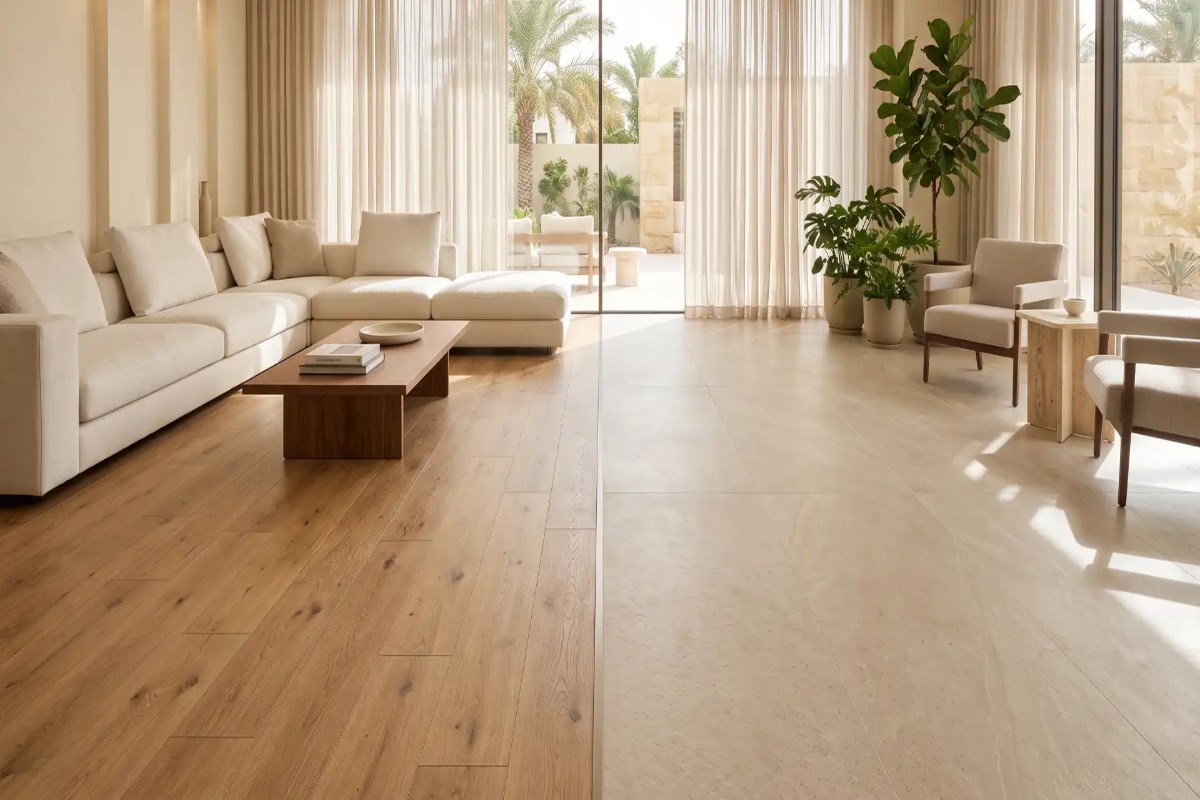
Comparing vinyl flooring vs tiles is most useful when the decision includes the complete renovation, not just the material price. Vinyl may suit a room where underfoot comfort and a simpler refurbishment matter, while ceramic or porcelain tiles may be preferred for their hard surface and particular design options. The better choice depends on preparation, water exposure, maintenance and how the household uses the space.
For this comparison, “tiles” means ceramic or porcelain. Luxury vinyl tiles belong to the vinyl family despite the similar name. Keeping that distinction clear helps when reading quotations or discussing samples with an installer.
Before pricing new materials, inspect the existing base. Loose tiles, dampness, uneven levels or damaged screed can change the work required for either option. A low material price offers little advantage if essential preparation is missing from the quotation.
The possibility of laying vinyl over existing tiles can make vinyl attractive for refurbishment, but it is conditional. Existing tiles must form a suitable base, and grout lines or height differences may need treatment. Check door clearances, transitions and access to appliances before assuming the old surface can stay.
Ask each contractor to price the same room area and define the same scope. Include removal where needed, waste disposal, surface preparation, fitting and finishing details. For tiles, check adhesive, grout and edge profiles; for vinyl, confirm the specified fixing method and any approved underlay.
A practical vinyl flooring vs tiles comparison also considers disruption. Find out which rooms will be unavailable, how furniture will be moved and when the finished floor can be used. Do not assume every click installation is immediate or every tiled installation follows the same timetable; preparation and product instructions determine the sequence.
Vinyl generally feels less hard underfoot than ceramic or porcelain, which may be welcome in a kitchen or family living area. Tile can provide a firm, cool feeling that some households prefer. Try samples with ordinary indoor footwear and think about where people stand for longer periods.
When weighing vinyl flooring vs tiles, assess noise through the complete floor assembly. The subfloor, installation and any acoustic layer all matter, particularly in an apartment. Review the complete system rather than adding an unapproved soft underlay. Rugs and furnishings can help reduce echo in the room, but they do not establish the floor's measured acoustic performance.
The main types of vinyl flooring include products with different constructions and installation methods. A flexible glued product and a rigid click plank should not be treated as interchangeable simply because their printed designs look similar. Compare their intended use, surface specification and requirements for the base.
For example, the Gerflor luxury vinyl tiles category contains several designs. Select an exact reference before asking about wear or room suitability. Ceramic and porcelain also vary in surface finish and intended use, so the same discipline applies: appearance alone cannot establish resistance to scratching, slipping or impact.
Cleaning is another consideration in vinyl flooring vs tiles: both benefit from removing loose grit before washing. Vinyl needs a compatible cleaner and care that follows the manufacturer's instructions. Tiles require attention to both their surface and grout, particularly where the joint colour makes residue more noticeable.
Think about likely marks rather than an ideal photograph. Dining chairs can move grit across the floor; cooking leaves splashes; a balcony entrance brings in dust. A sample with moderate variation may make everyday debris less conspicuous, but it still needs cleaning. Avoid assuming that a dark colour or a glossy finish will always be easier to maintain.
A water-resistant surface is only one part of managing moisture. Bathrooms and other wet areas need an appropriate installation, including details around edges and fittings. Confirm the product's permitted use and the necessary waterproofing arrangement instead of relying on a broad waterproof label.
Ask how a damaged section would be replaced and retain suitable spare material. Suppliers such as Floorna list Gerflor vinyl collections, making it possible to record the range and design precisely. Keep the invoice and product code with the spare pieces so a future repair starts with clear information.
The vinyl flooring vs tiles decision becomes clearer when priorities are ranked. Comfort and a workable refurbishment sequence may favour vinyl; a particular ceramic finish or an approved wet area design may favour tiles. Compare complete specifications, test samples in the room and choose the option whose installation and upkeep fit the household's routine.

This post has been authored and published by one of our premium contributors, who are experts in their fields. They bring high-quality, well-researched content that adds significant value to our platform.










Daily Outfits is your trusted fashion destination for outfit inspiration, style tips, seasonal trends, wardrobe guides, and everyday fashion advice. Stay inspired and dress with confidence every day.